
Choosing a family car is different from choosing a car for yourself. You are not just picking something that looks good in the driveway. You are picking the vehicle that will carry your children to school, survive road trips, absorb spilled juice, and hopefully keep everyone safe for the next ten years.
The good news is that 2026 offers a strong crop of choices. Hybrids have become mainstream in family-sized vehicles, three-row SUVs are more refined than ever, minivans have quietly become some of the smartest buys on the market, and electric family cars are finally getting more practical and affordable.
This guide walks through the best options by category, explains what to look for, and helps you decide which type of vehicle suits your household. Prices, trims, and availability change by country and model year, so please confirm the final details with a local dealer or the manufacturer’s website before you buy.
What Makes a Great Family Car?
Before looking at specific models, it helps to agree on what “great for families” actually means. A car can be fast, stylish, and expensive and still be a poor family vehicle. These are the qualities that matter most.
Safety. This is the first priority. Look for strong crash-test results from independent organizations such as IIHS and NHTSA in the United States, or Euro NCAP in Europe. Also check for standard driver-assistance features like automatic emergency braking, blind-spot monitoring, and rear cross-traffic alert.
Space and flexibility. Families carry a lot: car seats, strollers, sports gear, groceries, pets. Look at real usable space, not just the number on the spec sheet. Wide-opening doors, flat load floors, and easy-folding seats make daily life much easier.
Ease of installing child seats. This is often overlooked. Some cars have awkward seat shapes or hard-to-reach anchor points that turn a simple task into a daily struggle. If you have young children, bring your own car seats to the test drive and try installing them.
Running costs. Fuel, insurance, servicing, and depreciation matter more over a long ownership period than a small difference in sticker price. A slightly more expensive hybrid can easily cost less over five years than a cheaper petrol model.
Reliability. A family cannot afford a car that spends weeks in the workshop. Brands with a strong reliability record deserve extra consideration.
Comfort. Long drives with tired children are much easier when the ride is smooth, the cabin is quiet, and the rear seats are comfortable.
With that in mind, here are the vehicles worth your attention.
Best Three-Row SUVs
Three-row SUVs remain the default choice for many larger families. They offer seating for six to eight, strong cargo flexibility, and a commanding driving position. The segment is highly competitive, which is good news for buyers.
Hyundai Palisade
The Palisade has long been a favorite among families, and the latest generation raises the bar again. It has a larger, more refined design, a more upscale interior, and a hybrid option for buyers who want lower fuel costs without changing how they live.
What families tend to love about the Palisade is its sense of thoughtfulness. The cabin is spacious, the second row is comfortable, and the third row is usable for older children and even many adults on shorter trips. Storage cubbies, USB ports, and well-placed cupholders show that someone designed this vehicle with real families in mind.
It also comes with a long list of safety and convenience features, and Hyundai has traditionally offered a generous warranty. For most families shopping in this category, the Palisade should be one of the first vehicles on the test-drive list.
Toyota Grand Highlander
If the Palisade is the polished all-rounder, the Grand Highlander is the practical, sensible powerhouse. It is larger than the regular Highlander and was designed specifically to fix the main complaint about three-row SUVs: a cramped third row.
Here, the third row is genuinely roomy, and there is respectable cargo space even with all seats in use. Toyota offers hybrid versions, including a stronger variant for buyers who want more power, and the combination of efficiency and the brand’s reputation for dependability makes it a very safe choice.
It is not the most exciting vehicle to drive, but most family buyers will not mind. What it offers is comfort, space, and peace of mind.
Kia Telluride
The Telluride arrived a few years ago and immediately became one of the most popular family SUVs on the market. Its boxy, upright styling gives it a rugged look and also helps with interior space. The cabin is airy, the seats are comfortable, and the overall quality feels well above its price.
Because the segment moves fast, check what the current model year offers, including any new powertrain options. As with the Palisade, Kia’s value proposition remains strong: lots of features, a spacious interior, and a competitive price.
Honda Pilot
Honda has built a reputation on practicality, and the Pilot is a good example. It is a straightforward, well-built family hauler with a smart interior layout and sensible technology. Rear seat access is easy, the cargo area is flexible, and the driving experience is calm and predictable.
Some trims also offer off-road-friendly hardware for families who like weekend trips to rough campsites. It may not top every list for style, but it is the kind of vehicle that quietly does everything well.
Mazda CX-90
If you want a three-row SUV that is genuinely enjoyable to drive, the CX-90 is the standout. Mazda has aimed it at the premium end of the market, with a refined interior, strong engines, and a plug-in hybrid option. The handling is sharper than most rivals, and the cabin materials feel upscale.
The trade-off is that the third row is less generous than in the Grand Highlander or Palisade, and prices can climb quickly on higher trims. For families with older children, or those who only occasionally use the third row, it is an excellent option.
Subaru Ascent
Subaru’s three-row SUV is built around standard all-wheel drive, good ground clearance, and a strong safety reputation. If you live in a region with heavy rain, snow, or rough roads, the Ascent deserves serious attention. It is also known for thoughtful family touches, such as plentiful cupholders and accessible seat layouts.
Best Two-Row SUVs
Not every family needs three rows. For many households with one or two children, a good two-row SUV is easier to park, cheaper to run, and much more pleasant to drive day to day. This is also where the biggest changes are happening in 2026.
Toyota RAV4
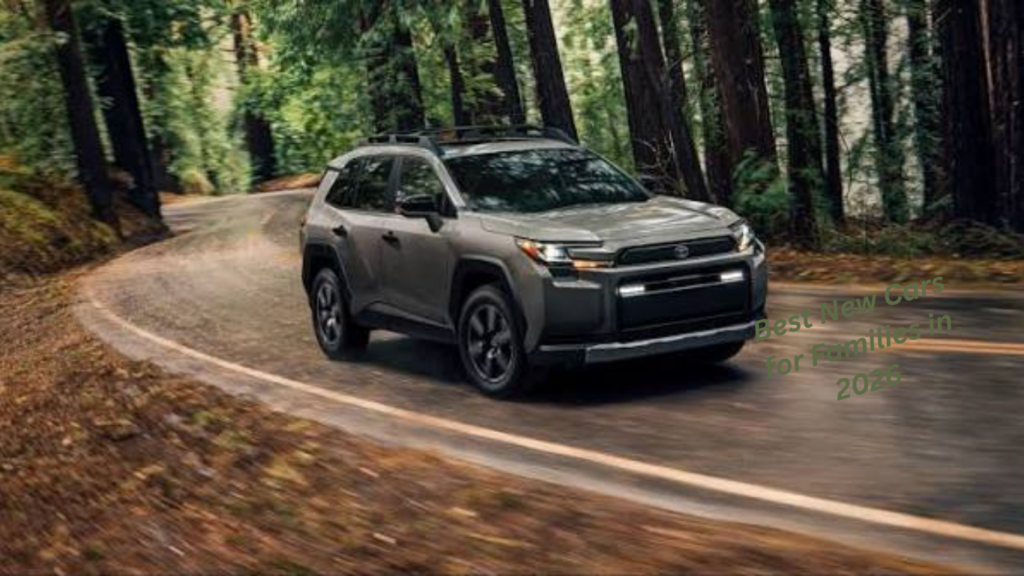
The RAV4 is one of the best-selling vehicles in the world, and the latest generation is a significant update. In the United States, it is offered with hybrid powertrains only, which means every buyer gets better fuel economy as standard. A plug-in hybrid version offers a meaningful electric-only range, which can cover many daily school runs and errands without using any gasoline.
For families, the RAV4 is appealing because it combines practicality with reliability and low running costs. It is not the flashiest vehicle, but it is hard to argue with its sensible formula.
Honda CR-V
The CR-V has long been a benchmark in this class. Its cabin is spacious, the rear seats are comfortable, and the cargo area is large and easy to use. The hybrid version delivers excellent efficiency without sacrificing smoothness.
Rear doors open wide, which makes loading children and car seats less of a chore. If you want a calm, well-rounded family SUV that does nothing badly, the CR-V is a strong pick.
Hyundai Santa Fe
The redesigned Santa Fe took a bold approach, adopting a boxier, more practical shape that significantly improves interior space and cargo capacity. It offers hybrid options and a modern cabin with plenty of technology. For families who like the Palisade but do not need a third row, the Santa Fe is an excellent alternative.
Kia Sorento
The Sorento sits in an interesting spot. It is a two-row SUV that also offers an optional small third row in some versions, making it useful for families who occasionally need extra seats. Hybrid and plug-in hybrid versions add efficiency, and the interior feels modern and well put together.
Subaru Forester
The Forester has always been a practical choice, with excellent visibility, a roomy rear seat, and standard all-wheel drive. A hybrid version has joined the lineup, improving fuel economy. It is a great option for families who enjoy outdoor activities and want something dependable and safe.
Mazda CX-5
Mazda’s compact SUV has been redesigned, and it continues to be one of the most enjoyable vehicles in its class to drive. The interior feels more premium than the price suggests. It is a good choice for families who want a bit more driving enjoyment without paying for a luxury badge.
Best Minivans
This is where many experienced parents quietly end up. Minivans are not glamorous, but they are arguably the best family vehicles ever designed. Sliding doors mean children cannot hit the car next to you in a tight parking space. The low floor makes loading easy. The interior space is huge, and the seating is flexible.
Toyota Sienna
The Sienna is now hybrid-only, which gives it excellent fuel economy for such a large vehicle. It is available with all-wheel drive, a comfortable ride, and a spacious, well-designed interior. Reliability is another strong point.
For families who want maximum space with minimum fuel costs, the Sienna is difficult to beat.
Chrysler Pacifica
The Pacifica is known for its clever features, including Stow ‘n Go seating on some versions, which lets the second-row seats fold into the floor. It also offers a plug-in hybrid version with a useful electric range, which makes short daily trips very cheap. The interior is comfortable and family-friendly, with plenty of tech.
Honda Odyssey
The Odyssey has been a family favorite for years. It drives better than most minivans, has a roomy and flexible cabin, and includes thoughtful touches such as a cabin-watching camera in some versions, so you can keep an eye on children in the back.
Kia Carnival
Kia markets the Carnival as a multi-purpose vehicle, and its styling is closer to an SUV than a traditional minivan. It still has sliding doors, a big interior, and strong value for money. A hybrid version has been added, improving its running costs. If you want the practicality of a minivan without feeling like you drive one, the Carnival is a smart choice.
Best Electric Family Cars
Electric vehicles are becoming a realistic option for many families, especially those who can charge at home. Here are the models most worth considering.
Kia EV9
The EV9 is a large three-row electric SUV with a bold design, a spacious interior, and fast charging capability. It offers a comfortable ride, a high-quality cabin, and seating for up to seven. For families who want to go fully electric without giving up the third row, it is one of the best options available.
Hyundai Ioniq 9
Hyundai’s three-row electric SUV is aimed at similar buyers. It focuses on interior space, comfort, and a long driving range. It is a large vehicle, so it is best suited to families who truly need the size.
Rivian R2
The R2 is a midsize electric SUV designed to reach a much broader audience than the brand’s earlier models, with a target starting price in the mid-forty thousand dollar range. It combines a rugged look with a practical interior, and it could be a strong choice for active families. As with any new model from a younger company, check how deliveries and early owner reviews are going before committing.
Nissan Leaf
The third-generation Leaf has been reimagined as a compact crossover, with improved range and a modern design. It is aimed at buyers who want a sensible, affordable electric car for daily life. It may be especially attractive as a second family car for commuting and school runs.
Chevrolet Bolt
The Bolt is returning with a focus on affordability. It is a small, practical electric hatchback aimed at buyers who want simple, low-cost electric transportation. For small families, or as a second vehicle, it could be a very economical choice.
Subaru Trailseeker
This electric wagon-style SUV comes with standard all-wheel drive and plenty of cargo space. It suits families who want an electric vehicle that can handle rough roads and bad weather.
Tesla Model Y
The Model Y remains one of the most popular electric vehicles in the world. It offers a large cargo area, good charging access, and strong safety ratings. Some buyers love its minimalist interior and others do not, so spend time in one before deciding.
Safety Features Every Family Should Look For
Safety technology has improved enormously in recent years. When comparing vehicles, these are the features worth prioritizing.
Automatic emergency braking with pedestrian detection. This can prevent or reduce the severity of low-speed collisions, which are common around schools and driveways.
Blind-spot monitoring and rear cross-traffic alert. These make parking lots and lane changes much safer.
Rear seat reminder. This feature alerts the driver to check the back seat when leaving the car, which can help prevent children or pets from being forgotten.
Rear door child locks and window locks. Basic, but essential.
Good headlights. Surprisingly, headlight performance varies a lot between vehicles and trims. IIHS tests this, and it is worth checking.
Strong crash-test ratings. Look at the full results, not just the headline score. Pay attention to how well the vehicle protects rear passengers.
Practical Tips for Choosing
Bring your car seats to the test drive
This is the single best tip. Try installing each seat you own, forward-facing and rear-facing. Check how much space is left for the front passengers. Notice how easy it is to buckle a child in and out. A vehicle that looks perfect on paper may be frustrating in daily use.
Count your real needs, not your maximum needs
Many families buy a three-row SUV because they might occasionally need to carry extra passengers. If that happens twice a year, a two-row SUV with a roof box, or occasionally borrowing a larger vehicle, may be much cheaper than owning a bigger car every day. Be honest about your usual routine.
Think about the next five to ten years
Children grow. A car that feels roomy now may feel tight when your kids become teenagers with long legs and large backpacks. At the same time, a vehicle that seems oversized today may be perfect later. Think about how your family will change.
Compare running costs
Fuel consumption, insurance, tires, and maintenance vary widely. Hybrids and electric vehicles often cost less to run, but they may cost more to buy. Use an online calculator to estimate total ownership costs over a few years.
Check charging options if you are considering an EV
If you can charge at home, an electric car becomes very convenient. If you rely on public charging, check how many fast chargers are near your home, your workplace, and the routes you take for holidays. A plug-in hybrid can be a good middle ground for families without reliable charging.
Look at warranty and service networks
A long warranty is valuable, especially for a car you plan to keep for many years. Also check that there is a reliable service center nearby, since a convenient workshop makes ownership much less stressful.
Do a long test drive
A ten-minute loop around the block tells you almost nothing. Ask for a longer drive, or try renting the vehicle for a day if the dealer or rental company allows it. Drive it on a highway, in city traffic, and in a parking lot. Take the whole family if you can.
Which Type of Vehicle Is Right for You?
Here is a simple way to think about it.
If you have one or two young children and want efficiency, a hybrid two-row SUV like the RAV4, CR-V, or Santa Fe is likely the best fit.
If you have three or more children, or often carry extra passengers, a three-row SUV like the Palisade, Grand Highlander, or Telluride makes sense.
If you want maximum space, comfort, and practicality, a minivan like the Sienna, Pacifica, or Odyssey is hard to beat. Do not let image concerns put you off.
If you drive mostly short distances and can charge at home, an electric car such as the Leaf, Bolt, or EV9 could save you a lot of money over time.
If you enjoy driving and want something a bit more upscale, the Mazda CX-90 or CX-5 offers a more engaging experience without sacrificing family usability.
If you live in a snowy or rural area, the Subaru Ascent, Forester, or Trailseeker should be on your list thanks to their standard all-wheel drive.
Common Mistakes Families Make When Buying a Car
Buying based on looks alone. A beautiful car that is difficult to live with becomes frustrating very quickly.
Ignoring insurance costs. Insurance premiums can vary substantially between models, so get quotes before you decide.
Stretching the budget too far. A car payment that strains your finances is not worth it, no matter how nice the vehicle is. Leave room for fuel, maintenance, and unexpected costs.
Skipping independent reviews. Manufacturer claims are always positive. Read reviews from independent testers and, if possible, real owners.
Not checking the cargo area. Fold the seats, open the trunk, and try fitting your stroller and bags. Space numbers on paper do not always translate to usable space.
Forgetting about resale value. Vehicles from brands with strong reputations tend to hold their value better, which can reduce the real cost of ownership.
Final Thoughts
There has never been a better time to shop for a family car. Safety technology is excellent, hybrids are widely available, electric options are expanding, and there is real competition in every category.
If you want a simple recommendation, start with the following shortlist. For a sensible two-row family SUV, look at the Toyota RAV4 or Honda CR-V. For a three-row SUV, check out the Hyundai Palisade and Toyota Grand Highlander. For the best overall family space, consider the Toyota Sienna or Chrysler Pacifica. For an electric family vehicle, test the Kia EV9 or the new Nissan Leaf.
Whatever you choose, remember that the best family car is the one that fits your life. It should keep your children safe, suit your budget, and make everyday routines easier. Take your time, test drive more than one option, and trust your experience in the car more than any headline or advertisement.