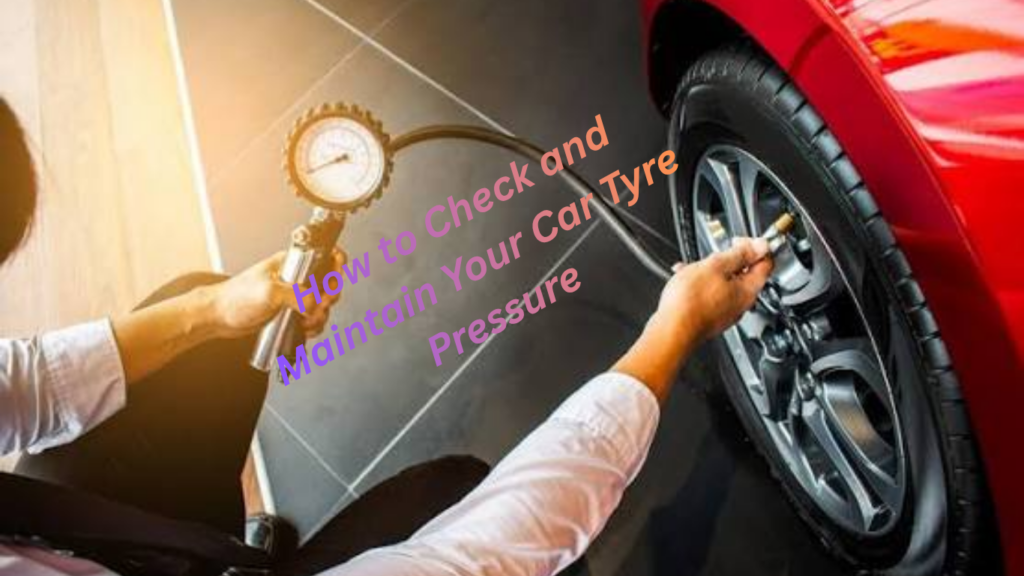

Most drivers spend a lot of time thinking about engines, fuel, and servicing, yet the four patches of rubber that actually touch the road often get ignored. Every instance of braking, steering, and accelerating depends on them. And one of the simplest things you can do to keep them working properly costs almost nothing: check the air pressure.
Correct tyre pressure improves safety, saves fuel, extends tyre life, and makes your car more comfortable to drive. Incorrect pressure does the opposite, and it usually happens so gradually that you never notice until something goes wrong.
This guide explains everything you need to know in plain language: why pressure matters, how to find the right figure for your car, how to check it properly, how to inflate or release air, and how to avoid the most common mistakes. You do not need any special skills, and the whole routine takes about ten minutes once a month.
Why Tyre Pressure Matters So Much
It is easy to treat tyre pressure as a minor detail, but it affects almost every aspect of how your car behaves.
Safety
A tyre does not carry your car’s weight on its rubber. It carries it on the air inside. When the pressure drops, the tyre sidewalls flex more than they were designed to. This generates heat, and excessive heat is a leading cause of tyre failure and blowouts, especially at highway speeds or in hot weather.
Pressure also affects the size and shape of the contact patch, the small area of rubber that is actually touching the road at any moment. If the pressure is wrong, that patch changes shape. The result can be longer braking distances, weaker grip in wet conditions, and slower, less precise steering response.
Fuel Economy
An underinflated tyre has more rolling resistance. In simple terms, the engine has to work harder to move the car forward. Across thousands of kilometres, that extra effort turns into noticeably higher fuel consumption. The same applies to electric cars, where low pressure reduces range.
Even a modest drop in pressure across all four tyres can add a small but real percentage to your fuel bill over a year. Since keeping tyres inflated is free or nearly free, it is one of the easiest ways to save money.
Tyre Lifespan
Tyres are expensive, and wear is the main reason they need replacing. Pressure has a big influence on how evenly they wear.
- Underinflated tyres wear faster on the outer edges of the tread, because the centre of the tyre sags and the shoulders take most of the load.
- Overinflated tyres wear faster in the centre of the tread, because the tyre bulges and only the middle touches the road properly.
A set of tyres kept at the correct pressure can last significantly longer than a set that is regularly neglected.
Comfort and Handling
Too little pressure makes steering feel lazy and the car feel wallowy in corners. Too much makes the ride harsh and bouncy, and reduces grip because the tyre cannot conform to small bumps in the road.
Understanding Tyre Pressure Units
Before you start, it helps to understand the units used for pressure. Depending on where you live, you may see several different ones.
- PSI (pounds per square inch) is common in the United States, the United Kingdom, and many other countries. Typical car tyres run between 30 and 36 PSI, though this varies.
- Bar is widely used in Europe and many other regions. One bar is roughly 14.5 PSI, so 2.2 bar is about 32 PSI.
- kPa (kilopascals) is used in some countries and on many vehicle placards. 220 kPa is roughly 32 PSI.
Most modern gauges and air pumps can switch between units, so pick the one that matches the figure for your car. Do not guess or convert in your head if you are unsure. Use the unit shown on the placard or in the manual.
- Inside the fuel filler flap
- On the inside of the glovebox lid
- In the owner’s manual
The placard normally lists different pressures for the front and rear tyres, and sometimes separate figures for normal loads and heavy loads, such as a full set of passengers plus luggage. Always use the figure that matches your situation.
Do Not Forget the Spare
If your car has a spare tyre, it often needs a different pressure from the regular tyres, and compact spare wheels usually need much higher pressure. Check the placard or the spare wheel itself. A spare that is flat when you need it is of no use to anyone.
What You Need to Check Tyre Pressure
A few basic items are enough.
A reliable tyre pressure gauge. There are three common types:
- Digital gauges are easy to read and usually accurate. They are the best choice for most people.
- Dial gauges are also easy to read and tend to be durable.
- Stick or pencil gauges are cheap and compact, but can be harder to read accurately.
Avoid relying only on the gauges at petrol stations. They are used by many people, knocked around, and often poorly maintained. Owning your own gauge is a small investment that pays off.
An air source. This could be a portable electric compressor, a foot pump, or the air machine at a petrol station or tyre shop. A portable compressor that plugs into your car’s power socket is especially handy.
A small cloth or glove. Valve stems can be dirty, and tyres can be hot or grimy.
Valve caps. Make sure you have all four. If any are missing, replace them.
When to Check Your Tyre Pressure
Timing matters more than most people realise, because air expands when it heats up and contracts when it cools.
Check When the Tyres Are Cold
For an accurate reading, always check pressure when the tyres are cold. This means either before you drive at all, or after the car has been parked for at least three hours. If you drive for even a few kilometres, friction heats up the tyres and raises the pressure reading, sometimes by several PSI.
If you need to inflate after a drive because there is no other option, add air slightly above the target and recheck once the tyres cool down. Never let air out of a warm tyre to bring the reading down to the cold figure, because it will end up underinflated once it cools.
How Often Should You Check?
- At least once a month. Tyres naturally lose a small amount of air over time, even when nothing is wrong.
- Before long trips. Fully loaded cars on long highway drives put extra stress on tyres.
- When the seasons change. Temperature shifts affect pressure significantly.
- After hitting a pothole or kerb. A hard impact can damage a tyre or cause a slow leak.
- Whenever the car feels different. Pulling to one side, vibration, or sluggish steering can all point to a pressure problem.
The Effect of Temperature
As a rough rule, tyre pressure changes by about 1 PSI for every 10 degrees Fahrenheit change in temperature, which is around 1 PSI for every 5 to 6 degrees Celsius. This is why your tyre pressure warning light often comes on during the first cold morning of autumn or winter. The tyres have not necessarily developed a leak; the cold air has simply contracted.
In hot climates, the opposite is true. Pressure rises in the heat, and a tyre inflated to the correct figure early in the morning can read noticeably higher by afternoon on a hot road.
How to Check Your Tyre Pressure Step by Step
Once you have your gauge and know the correct figures, the process is simple.
Step 1: Park on Level Ground
Park the car on flat ground, ideally in a shaded spot. Make sure the tyres are cold, as explained above.
Step 2: Find the Recommended Pressure
Look at the placard on the door jamb or in the manual and note the pressures for the front and rear tyres. Write them down or take a photo on your phone so you do not have to look them up every time.
Step 3: Remove the Valve Cap
Unscrew the small cap from the valve stem on the first tyre. Keep it somewhere safe, such as in your pocket, so it does not roll away.
Step 4: Press the Gauge onto the Valve
Press the gauge firmly and squarely onto the valve stem. You may hear a short hiss of air as it connects. Once the seal is good, the hiss should stop and the gauge will give you a reading. If air keeps escaping, reposition the gauge.
Step 5: Read and Record the Pressure
Read the number on the gauge. If you are using a digital gauge, wait for the figure to settle. Note the reading for each tyre so you can spot patterns over time, such as one tyre that consistently loses air faster than the others.
Step 6: Compare with the Recommended Figure
If the reading matches the recommended pressure, replace the valve cap and move on to the next tyre. If it is lower, you need to add air. If it is higher, you need to release some.
Step 7: Repeat for All Four Tyres, and the Spare
Check every tyre, including the spare if you have one. Pressure can differ from tyre to tyre, particularly if one has a slow leak.
How to Add Air to Your Tyres
If one or more tyres are below the recommended pressure, here is how to bring them back up.
Using a Portable Compressor or Home Pump
- Connect the pump hose to the valve stem and secure it firmly. Many have a screw-on or lever-lock connector.
- Turn the pump on and let it run for a short time.
- Stop and check the pressure with your gauge, or use the pump’s built-in gauge if it is accurate.
- Continue adding air in short bursts until you reach the target pressure.
- Disconnect the hose and replace the valve cap.
Using a Petrol Station Air Machine
Many of these machines let you set the target pressure in advance and will stop automatically when it is reached. Even so, check the final result with your own gauge, because the machine’s reading may be slightly off.
Take your time and add air gradually. It is much easier to add a little more than to take air out and start again.
How to Release Air from an Overinflated Tyre
If the reading is higher than recommended and the tyres are cold, you will need to let some air out.
- Remove the valve cap.
- Press the small metal pin in the centre of the valve with the back of the gauge, a small tool, or even a pen tip. You will hear air escaping.
- Release air in short bursts of one or two seconds.
- Check the pressure after each burst until you reach the right figure.
- Replace the valve cap.
Be careful not to release too much. If you overshoot, simply top up again.
Understanding Your Tyre Pressure Monitoring System (TPMS)
Most modern cars have a tyre pressure monitoring system, and in many countries it is a legal requirement on new vehicles. It warns you when pressure in one or more tyres has dropped below a safe level.
Two Types of TPMS
- Direct TPMS uses a small sensor inside each tyre to measure actual pressure. Some systems can show the exact pressure for each tyre on the dashboard.
- Indirect TPMS does not measure pressure directly. Instead, it uses the wheel speed sensors from the anti-lock braking system to detect when a tyre is spinning faster than the others, which suggests it is underinflated. It is usually less precise.
What the Warning Light Means
A yellow symbol that looks like a flat tyre with an exclamation mark means one or more tyres are significantly underinflated. When it comes on:
- Do not ignore it. Find a safe place and check the tyres as soon as possible.
- Inflate to the correct pressure, then drive for a few minutes. The light often switches off by itself.
- If the light flashes for a while and then stays on, it may indicate a fault with the system itself, such as a failing sensor battery.
- If the light returns repeatedly, you may have a slow puncture or a faulty valve, and you should have a professional inspect it.
TPMS Is Not a Replacement for Manual Checks
The TPMS usually only warns you when pressure has dropped by a considerable amount, often around 20 to 25 percent. By that point, the tyre is already significantly underinflated. Regular manual checks will catch smaller problems long before the warning light does.
Signs Your Tyre Pressure Is Wrong
Sometimes the car tells you before you check. Watch for these signs.
Signs of Underinflation
- The steering feels heavy or slow to respond
- The car feels unstable or wobbly in corners
- Fuel consumption has gone up
- The tyre looks visibly flatter at the bottom
- The outer edges of the tread are wearing faster than the centre
- The tyre pressure warning light is on
Signs of Overinflation
- The ride is noticeably harsh and bouncy
- The car feels skittish on wet roads
- The centre of the tread is wearing faster than the edges
- Braking distances seem longer than they should be
If you notice any of these, check your pressure as soon as you can.
Common Mistakes to Avoid
Even careful drivers fall into some of these traps.
Using the sidewall figure. As mentioned earlier, this is the maximum, not the recommendation.
Checking when the tyres are hot. This leads to misleading readings and bad adjustments.
Forgetting the spare tyre. Do not wait until you have a flat to discover your spare is also flat.
Relying only on the dashboard warning. The TPMS is a safety net, not a replacement for monthly checks.
Ignoring uneven pressure between tyres. If one tyre keeps losing more air than the others, there is probably a slow leak that needs to be repaired.
Skipping the valve caps. Valve caps keep dirt and moisture out of the valve. Missing caps can lead to leaks over time.
Not adjusting for load. If you are carrying heavy loads or travelling with a full car, check whether your manufacturer recommends higher pressure for those conditions.
Over-trusting cheap or worn gauges. If you suspect your gauge is inaccurate, compare it against another one or buy a better one.
Seasonal and Special Considerations
Winter
Cold weather causes pressure to drop, so check more often during winter. If you live somewhere with snow and ice, keep the pressure at the recommended level rather than lowering it, despite old myths about improved traction. Underinflated tyres reduce control and increase wear.
Summer
Hot weather increases pressure, but it also increases the risk of heat build-up and blowouts. Check your tyres cold in the morning and avoid overinflating in anticipation of the heat. The manufacturer’s figure already allows for normal temperature rises during driving.
Long Journeys and Heavy Loads
If you are planning a long trip or loading the car with luggage, passengers, or a roof box, look at the placard for load-specific pressures. Some manufacturers recommend a slightly higher pressure for fully loaded vehicles.
Off-Road and Rough Roads
Some drivers deliberately lower pressure for sand or loose surfaces, but this should be done carefully and only when appropriate. Always return to the normal pressure before driving on regular roads.
Seasonal Tyre Changes
If you switch between summer and winter tyres, check the pressure after fitting each set and again after a few days, since new tyres can settle slightly.
Nitrogen vs Regular Air
You may have seen tyre shops offering nitrogen inflation. Nitrogen molecules are slightly larger than the oxygen molecules in regular air, so they escape through the rubber a little more slowly. Nitrogen is also drier, which can help reduce internal moisture.
The benefits are real but modest for ordinary drivers. Regular air is already about 78 percent nitrogen, and it is free. If you are offered nitrogen at a reasonable price or free, there is no harm in using it. But if not, you are not missing out on much, as long as you check your pressure regularly. Do not pay a large amount for it.
Tyre Care Beyond Pressure
Pressure is only part of good tyre care. Here are a few other habits that go well with regular pressure checks.
Check the Tread Depth
Tread helps your tyres grip the road and channel water away. Most countries set a legal minimum, often around 1.6 millimetres in many regions, though many experts recommend replacing tyres at 3 millimetres for better wet-weather safety. Many tyres have wear indicators built into the grooves. You can also use a tread depth gauge or a coin as a rough guide.
Inspect for Damage
While checking pressure, look at each tyre for:
- Cuts, cracks, or bulges in the sidewall
- Nails, screws, or stones embedded in the tread
- Uneven wear patterns
- Signs of dry rot or ageing, especially on tyres that are more than six years old
If you see a bulge or deep cut, avoid driving on the tyre and have it inspected immediately.
Rotate Your Tyres
Front and rear tyres wear at different rates. Rotating them according to the schedule in your owner’s manual, commonly every 8,000 to 12,000 kilometres, helps them wear evenly and last longer.
Keep Your Wheels Aligned and Balanced
Poor alignment causes uneven tyre wear and can make the car pull to one side. If you notice vibrations or pulling, or if you have recently hit a large pothole, have your alignment checked.
Replace Old Tyres
Even tyres with plenty of tread can degrade with age. The rubber hardens, and the structure can weaken. Check the four-digit date code on the sidewall. The first two digits show the week and the last two show the year of manufacture. Many manufacturers advise replacing tyres that are around ten years old, regardless of tread.
Frequently Asked Questions
Can I drive with low tyre pressure?
You can for a short distance to reach a safe place to inflate, but you should not make a habit of it. Driving on a badly underinflated tyre risks damage to the tyre, loss of control, and potentially a blowout.
Should all four tyres have the same pressure?
Not always. Many cars call for different pressures on the front and rear axles. Always follow the figures on your car’s placard.
Why does one tyre keep losing air?
A slow puncture, a faulty valve, a damaged rim, or a poor seal between tyre and wheel could all be to blame. A tyre shop can find the cause quickly, often with a simple soapy water test or by submerging the wheel.
Is it okay to use the maximum pressure printed on the tyre?
No. That figure is the limit the tyre can safely tolerate, not what your car requires. Use the manufacturer’s recommended pressure.
What should I do if the TPMS light stays on after inflating?
Drive for several minutes at moderate speed to let the system reset. If it still stays on, check the pressure again, look for a leak, or consult a professional. Some cars require a manual reset through the dashboard menu.
Do electric cars need different pressure?
Electric cars are heavier because of their batteries, so they often call for slightly higher pressure and specific tyres designed for the extra weight. Always follow the placard for your particular model.
A Simple Monthly Routine
To make this easy to remember, here is a quick routine you can follow once a month:
- Choose a time when the car has been parked for a few hours.
- Check the recommended pressures on your door placard.
- Measure all four tyres, plus the spare if you have one.
- Add or release air as needed.
- Inspect the tyres for damage and check that all valve caps are on.
- Write down your readings so you can spot trends over time.
The whole thing takes about ten minutes, and it could save you money, improve your safety, and help your tyres last far longer.
Final Thoughts
Checking and maintaining your tyre pressure is one of the simplest, cheapest, and most effective things you can do for your car. It does not require special skills or tools, and the benefits show up in almost every area: safer driving, better fuel economy, longer tyre life, and a smoother ride.
The key points are easy to remember. Use the pressure on your car’s placard, not the number on the tyre. Check when the tyres are cold. Do it at least once a month and before long journeys. Do not forget the spare. And never rely only on the warning light.
.