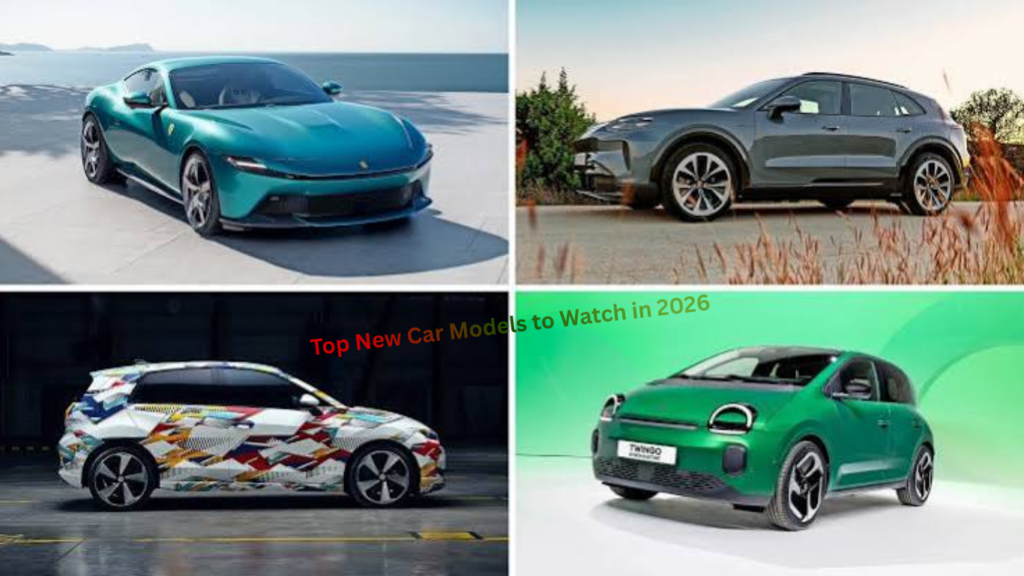

Every few years, the car industry hits a year where several things change at once. 2026 is shaping up to be one of them. Electric vehicles are getting cheaper and more practical, hybrids are no longer the “boring” choice, and some long-lost nameplates are returning. At the same time, a handful of performance cars are keeping the thrill of driving alive.
If you are shopping for a new car, or you simply love following the industry, this guide covers the models that deserve your attention in 2026. I have grouped them by type so you can jump to the section that matters most to you. Launch timing and pricing vary by country, so confirm the final details with your local dealer or the manufacturer before making any decision.
Why 2026 Is Such an Interesting Year
For a long time, buying a car was fairly simple. You picked a size, an engine, and a trim level. Today the choices are wider and more confusing, but also better.
Three big shifts define this year.
First, affordable EVs are finally arriving. For years, electric cars were either luxury products or compromised small cars. Now we are seeing models with real range, fast charging, and prices that ordinary families can consider.
Second, hybrids have grown up. Many buyers are not ready to go fully electric, and carmakers have noticed. New hybrid and plug-in hybrid models offer strong fuel economy without any change in daily habits.
Third, charging is becoming less of a headache. More new EVs now ship with the NACS charging port in North America, giving owners access to a much larger fast-charging network.
With that in mind, here are the models worth watching.
The Electric Vehicles Everyone Is Talking About
Rivian R2
Rivian built its reputation on big, expensive adventure vehicles. The R2 is the company’s attempt to reach a much wider audience. It is a midsize electric SUV designed to be more compact and more affordable than the R1S, with a starting price targeted at around $45,000.
What makes the R2 exciting is that it keeps the brand’s personality. It has a clean, rugged look, a spacious interior, and the sort of practical touches outdoorsy buyers appreciate. It is expected to be built at Rivian’s plant in Normal, Illinois, with deliveries beginning in 2026.
The R2 matters for another reason too. Rivian’s future depends on it. If the company can build it at volume and keep quality high, it could become a true mainstream EV maker rather than a niche brand. Anyone considering a midsize electric SUV should keep a close eye on this one.
BMW iX3 (Neue Klasse)
BMW calls its new generation of electric cars the Neue Klasse, a name borrowed from the 1960s models that saved the company and defined its sporty image. The new iX3 is the first production model on this platform, and it is a big deal.
The headline numbers are impressive. It uses an 800-volt electrical architecture, supports very fast charging, and BMW claims a range of up to around 800 kilometers on the WLTP cycle. Real-world numbers will be lower, especially in the United States where testing is stricter, but even a conservative figure would place it among the longest-range electric SUVs on sale.
Inside, BMW has gone with a minimalist approach, using a wide display that stretches across the base of the windshield instead of a traditional instrument cluster. Some people will love it and others will miss physical controls, but it shows how differently BMW is thinking about the car’s interior.
If you want an electric SUV that still feels like a BMW to drive, this is the one to test.
Mercedes-Benz CLA (Electric)
Mercedes is taking a smart approach with the new CLA. Rather than offering only an electric version, it is bringing the CLA out as a family with both electric and hybrid options. The electric model gets an 800-volt system, a claimed range of roughly 790 kilometers on the WLTP cycle, and a sleek, aerodynamic shape designed to squeeze out every mile.
The CLA is smaller and more approachable than the brand’s flagship EQ models. That makes it appealing to younger buyers or anyone who wants a premium electric sedan without the size and price of a large luxury car. It also introduces Mercedes’ newer software and driver-assistance technology to a broader audience.
Nissan Leaf (Third Generation)
The Nissan Leaf was one of the first mass-market electric cars, and it has been due for a serious refresh for a long time. The third-generation model is a big change. It is no longer a small hatchback. Instead, it has been reimagined as a compact crossover with a more modern look.
Nissan says the larger battery version can deliver roughly 300 miles of range, and the starting price in the United States is just under $30,000. It also moves to the NACS charging port, which is a major practical upgrade. For people who want a sensible, affordable electric car without a lot of drama, the new Leaf looks like a strong contender.
Chevrolet Bolt (Returning)
Few cars have had a more unusual story than the Chevrolet Bolt. It was discontinued after a costly battery recall, then people realized just how much they missed it. Now it is coming back.
The new Bolt arrives as a 2027 model year vehicle, with an expected starting price near $29,000. It uses a lithium iron phosphate battery, which costs less and tends to hold up well over time, and offers an estimated range of around 255 miles. Like the Leaf, it is built for people who want simple, affordable electric transportation.
The return of the Bolt tells you something about the market. Buyers are asking for small, honest, reasonably priced EVs, and manufacturers are finally listening.
Kia EV3
Kia has been on a strong run with its electric lineup, and the EV3 is a compact SUV that brings a lot of technology to a smaller package. In Europe, the long-range version is rated at roughly 600 kilometers on the WLTP cycle, which is excellent for its size.
The EV3 is practical, modern, and priced to compete with mainstream compact crossovers. Availability differs from market to market, so check whether it is offered where you live. Where it is available, it deserves a place on your shortlist.
Subaru Trailseeker
Subaru has taken its time with electrification, but the Trailseeker shows it is serious about making an electric car that suits its loyal buyers. It is an electric wagon-style SUV with standard all-wheel drive, generous ground clearance, and a cargo area designed for real life.
It is built in partnership with Toyota and shares technology with the Toyota bZ line, but Subaru has tuned it for its own audience. Expect a range of around 260 miles, which is enough for most owners. If you live somewhere with rough roads or snow, this is an EV that actually makes sense.
Hybrids That Deserve More Attention
Toyota RAV4 (Sixth Generation)
The RAV4 is one of the best-selling vehicles in the world, so any redesign is significant. The new generation is a major update, and in the United States it is offered with hybrid powertrains only.
That is a bold decision. It means every RAV4 buyer gets better fuel economy as standard. There is also a plug-in hybrid version with an electric-only range of roughly 50 miles and a noticeably stronger power output, which could cover most daily driving without using gasoline at all. A sportier trim is also in the lineup for people who want something with more character.
The RAV4 is not flashy, and that is exactly why it matters. When the most popular SUV in its class goes hybrid across the board, the whole market shifts.
Honda Prelude (Returning)
Some cars simply have a strong emotional pull, and the Prelude is one of them. Honda is bringing the name back as a two-door hybrid coupe, which is a surprising and welcome move in a market full of SUVs.
It is not a hardcore sports car. The hybrid system focuses on smooth, responsive driving rather than record-breaking speed, and Honda has included a simulated shifting feature to make the car feel more engaging. Think of it as a stylish, fun, everyday coupe with a bit of nostalgia built in. For anyone who misses cars that are simply enjoyable to drive, the Prelude is worth a test drive.
Hyundai Palisade (Redesigned)
The Palisade was already a popular three-row SUV, and the new generation brings a bigger, more refined design and a hybrid option. Families who need space but want to spend less on fuel will find this appealing.
Three-row SUVs are some of the most competitive vehicles on the market, and the new Palisade steps up the quality of its interior, technology, and overall comfort. It could become the default choice for large families who are not ready to go fully electric.
Jeep Cherokee (Returning)
Jeep is reviving the Cherokee name for 2026 as a compact SUV with hybrid power. The name carries a lot of history, and the company clearly hopes it can recapture some of that popularity.
The new Cherokee has a more modern design and a focus on efficiency, while still carrying the brand’s signature styling cues. Whether it can live up to the legacy of earlier models remains to be seen, but it fills an important gap in Jeep’s lineup.
Performance Cars That Keep the Excitement Alive
It is easy to assume that the performance car is a dying species, with all the attention on efficiency and electrification. 2026 proves otherwise.
Toyota GR GT
Toyota’s performance division has been building momentum for years, and the GR GT is its most ambitious project so far. It is a front-engine sports car built around a twin-turbocharged V8 hybrid system, with output in the neighborhood of 650 horsepower.
It is designed to compete with serious European sports cars, and early signs suggest Toyota is taking it very seriously. A halo car like this also raises the profile of the entire brand. Even if you never buy one, its existence makes the whole industry more interesting.
Porsche Cayenne Electric
Porsche has long been able to build SUVs that drive like sports cars, and the electric Cayenne continues that tradition. It brings very high power outputs, fast charging, and the polished handling the brand is known for.
For many buyers, this will be the point where an electric performance SUV stops feeling like a compromise. It is expensive, of course, but it shows what is possible when engineers focus on driving feel instead of just range numbers.
A Quick Look Beyond 2026
Some of the most interesting developments are just around the corner. Ford, for example, has talked about a new affordable electric pickup arriving in 2027 on a dedicated low-cost platform, with a target price around $30,000. If that plan holds, it could change expectations for what an electric truck should cost. Several other manufacturers are working on similar low-cost platforms, so the next few years should bring even more choice.
Big Trends Behind These Cars
Looking at these models together, a few patterns stand out.
Range is no longer the only story. A few years ago, every EV launch was about who could claim the biggest range number. Now the focus is shifting to charging speed, software quality, and price. A car that charges quickly and costs less often makes more sense than one with a huge battery.
Affordability is finally a priority. Carmakers spent years chasing high-margin luxury vehicles. The Bolt, the Leaf, the R2, and the upcoming budget platforms show that the industry has accepted it needs cars ordinary people can afford.
Nameplates are making a comeback. The Bolt, Prelude, and Cherokee all return this year. Brands are discovering that familiar names carry trust and emotion, and that can be worth more than a new name nobody recognizes.
Hybrids are here to stay. Many analysts once expected hybrids to be a short bridge to full electrification. Instead, they are becoming a long-term part of the lineup, especially in the most popular vehicle classes.
Software matters as much as hardware. From BMW’s new display layout to Mercedes’ driver-assistance systems, the quality of the digital experience is now a key selling point. A car with great hardware but clumsy software can quickly frustrate its owner.
How to Choose the Right Car for You
With so many options, it helps to think about your own situation before falling in love with a headline.
Think about where you will charge. If you have a home charger or a reliable spot at work, an EV becomes much easier to live with. If not, a hybrid or plug-in hybrid may be the smarter choice.
Be honest about your driving habits. Most people drive far less per day than they assume. A car with 250 miles of range may be perfectly adequate, and paying extra for a bigger battery you rarely use is not always worth it.
Consider the total cost, not just the sticker price. Fuel or electricity, insurance, maintenance, and resale value all add up. Cheaper models with strong reliability can end up costing less over time than a more exciting but expensive alternative.
Wait for real-world reviews. Manufacturer claims are always optimistic. Independent tests will tell you how a car performs in everyday conditions, so give early models some time to be reviewed before you commit.
Take a proper test drive. Numbers on paper do not tell you whether you will enjoy the seats, the steering, or the infotainment system. Spend at least thirty minutes in the car, and drive it on roads you actually use.
Final Thoughts
2026 is a year of real variety. If you want an affordable electric car, the Leaf and the Bolt are strong options. If you want a stylish, capable SUV with a modern feel, the Rivian R2 and BMW iX3 are impossible to ignore. If you are not ready to go electric, the new RAV4 and Palisade make a convincing case for hybrid power. And for those who simply love driving, the Prelude and the Toyota GR GT show that the passion for great cars is still very much alive.
The best car is the one that fits your life, your budget, and your habits. Use this list as a starting point, read independent reviews, and take your time. With so many good choices arriving, this is an excellent moment to be a car buyer.